
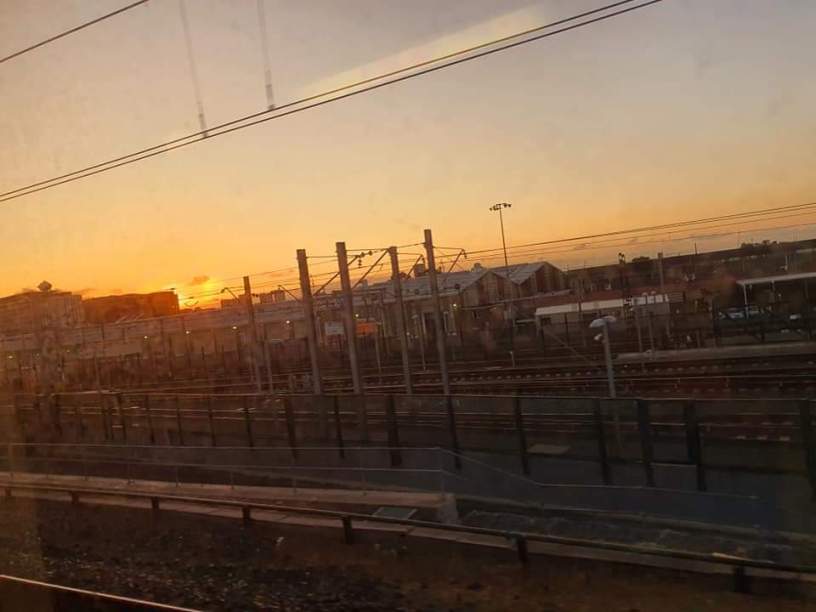
It was not yet five when I woke suddenly, startled by the looming alarm that I detested. Ten minutes remained until it would ring—the sound that ripped me daily ripped me from the sweetest part of sleep. But this alarm served a dual purpose; it didn’t merely wake me up. Each morning, it reminded me of the person I once hoped to be and the one I had now become.
I splashed water on my face, dressed in the orange uniform of my job, and grabbed the lunch I had prepared the night before. My feet carried me to the parking lot. From the blue car, I retrieved something and hastened to leave, but only a few steps later, I paused. I had forgotten something. I turned back. My new brown shoes—those I had forgotten to put on. From the trunk, I retrieved the shoes and put them on. Standing there for a brief moment, I felt the vague sensation that something else was missing, but no matter how hard I tried, I couldn’t recall what it was. Time was ticking, and I couldn’t afford to miss the 5:40 train to the city centre.
Arriving at the station, a rusted old train, seemingly made of tin, stood waiting. The screech of its decay echoed from miles away. Just as I boarded, the train jolted into motion as if it had been waiting for me all along. Inside, the carriages were crowded with workers, their faces weary but resolute. Every marked seat was taken. After walking through two cars, I finally found an empty seat at the end and sank into it, releasing a deep sigh of fatigue and quiet despair. And there, in the chaos of the crowded train, I discovered an unexpected sense of peace.
At Merrylands Station, a sudden thought struck me—I had forgotten my mask. But there was nothing I could do now. I pushed my headphones into my ears and played a melancholic song by Mohammad Wakili. His gentle voice, paired with the sorrowful melodies of Malestan, enveloped me:
“I’m in love. You don’t care at all,
I’m torn apart every moment. You don’t care at all.”
My heart felt fragile, like the clay jars my mother once made—so easily shattered with just one crack. Life, at times, presses down so heavily that there seems no choice but to break, to split apart. In such moments, solitude, music, and travel become desperate attempts to escape the harshness of it all—attempts that ultimately prove futile. As the train rattled through the western outskirts of the city, Wakili sang of a love misunderstood, a love lost. It reminded me of my own first love, nearly twenty years ago. She wasn’t extraordinarily beautiful; like any other girl, she had hair, she had eyes. What drew me to her was her silence, her quiet submission. In her, I saw a reflection of myself. Life’s relentless hardships had driven me to leave my village—a village that felt more like a prison—and to join the millions who sought refuge elsewhere. Two years after I migrated, I learned that she had married. Though by then, it meant nothing to me, the rejection still lingered in my memory, along with the hurtful words her mother had said to mine. I never saw that girl again, and perhaps I never will, but the memory of her has remained with me, etched into my mind like a scar.
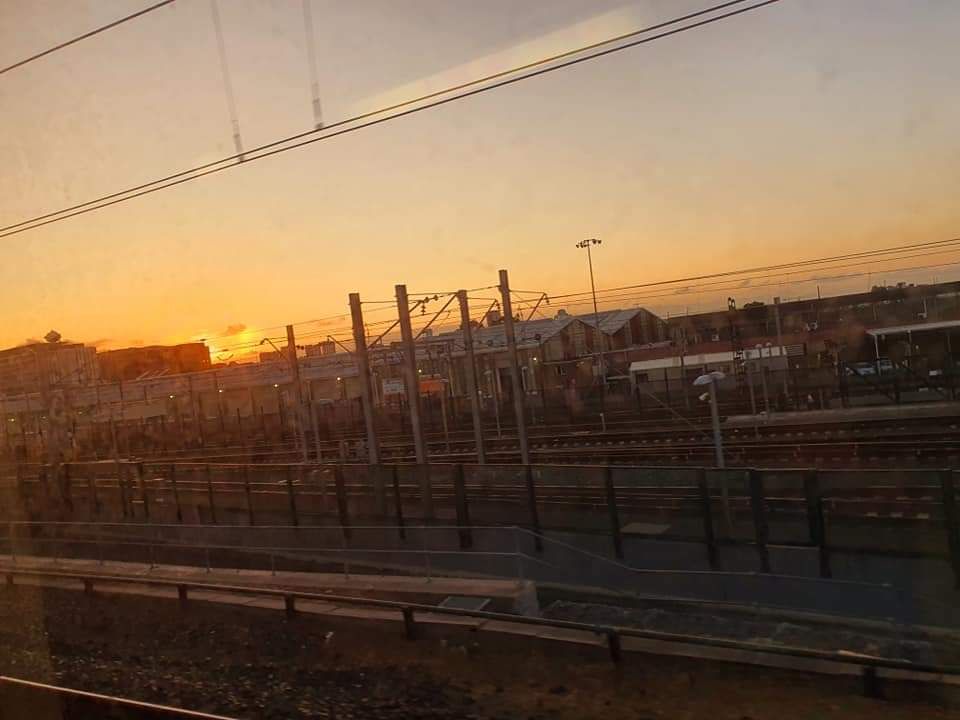
As the battered train passed the Channel Seven building, we neared the city centre. The sun began to rise behind the skyscrapers, its light slowly spilling across the city. Yet I remained lost in music and memory. Upon reaching Central Station, I transferred to another train to continue my journey to the far side of the city. By 6:30, I arrived at my destination. As usual, I grabbed a coffee from the corner store and joined my colleagues as we made our way to the worksite.
—
At 3:25 in the afternoon, I rushed down the stairs without bothering to wash my hands or face and bolted toward the train station. I couldn’t miss the 3:33 train. Getting home twenty minutes earlier meant more rest—twenty precious minutes sooner to collapse into bed. I ran part of the way, and just as the train doors were about to close, I managed to slip inside, breathless and sweating but pleased with myself for catching it. This wasn’t just the nature of life in Sydney—it was the nature of life itself. You must run, you must catch the train, or else it leaves without you.
As I settled into a seat, I exhaled deeply, and a sense of satisfaction washed over me. I hadn’t missed the 3:33 train. Like every day, I snapped a few selfies—one of the ways I try to capture fleeting moments. When I looked at my photo, I noticed a layer of dust on my glasses—dust that reminded me of Tehran. I inserted my headphones and turned on the music. As the melody overcame the noise around me, I slipped back into my thoughts.

The mournful voices of Mohammad Wakili and Baktash Malestani murmured through the headphones:
“I came, but I left the God behind
My innocent love were left behind
The sin isn’t mine, i have a bad life,
My innocent love left behind.”
Their song echoed a pain shared by many like me—the pain of separation, the sorrow of those forced to leave everything behind in search of something better. People who, in hopes of change, embark on a journey, only to find that the change either never comes or, when it does, arrives at a devastating cost. And sometimes, after years of struggle, they find themselves right back where they started.
I was lost in Malestani’s lamentations as the train rattled westward. At ten minutes to five in the evening, I arrived at my destination, exhausted both in body and spirit, and began the walk to home from the train station.
 Outsider