
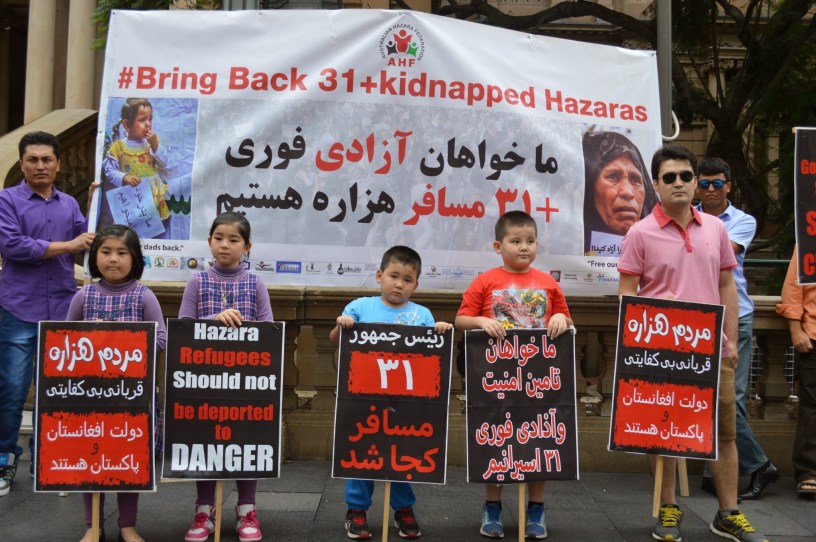
You may have often heard statements such as “the representatives of the Hazara community have done this or that!” In this article, I examine the prevalence of undemocratic practices within the institutions of the Hazara community in Western countries, particularly in Australia, where many associations claim to represent the collective voice of the people despite lacking any democratic legitimacy from the community.
The Hazara community in Western countries, especially Australia, is organised through various institutions that often claim to represent its members in cultural, social, and even political matters. However, a striking reality is that nearly 100% of these associations operate without democratic mechanisms such as free elections, transparency, or broad participation.
To understand the concentration of power in undemocratic diaspora organisations, three key theories offer valuable insights into the phenomena of power centralication, legitimacy, and control within these institutions.
The first theory is Robert Michels’ “Iron Law of Oligarchy” (1911). Michels argues that in any organisation, even those founded with democratic ideals, a small group of insiders eventually consolidates control, leading to restricted and exclusive decision-making processes. This phenomenon is particularly evident in diaspora institutions, where self-appointed representatives utilise informal structures to limit broader participation and secure their own positions.
The second theory is Pierre Bourdieu’s concept of “symbolic capital” (1986). Bourdieu introduces symbolic capital as a crucial tool for maintaining power. In diaspora communities, certain individuals leverage their social status, education, cultural influence, and networks to consolidate control over social and cultural institutions. This symbolic capital enables them to establish legitimacy without broad public approval while marginalising dissenting voices.
The third theory is the “diaspora governance” framework (Adamson, 2012). This analytical approach demonstrates that diaspora organizations, particularly in communities lacking democratic representation structures, often assume representative roles without electoral mechanisms or accountability. These organisations gain special status in decision-making processes related to migration policies, culture, and social affairs due to their connections with governmental and international institutions, often sidelining other voices within the community.
The institutions of the Hazara community in Western countries, particularly in Australia, exhibit characteristics of all three theories. As Michels’ oligarchy theory suggests, these institutions gradually purge dissenting voices, allowing a small group to assume ultimate control and restrict decision-making. In some cases, decision-making becomes even more concentrated, with power limited to just one or two individuals. A case in point is the “Hazara Federation of Australia,” an organisation initially established with significant community participation but later monopolised by a small group that systematically eliminated opposing voices.
Religious institutions within the Hazara community, along with the clerics who lead them, exemplify Bourdieu’s theory of symbolic capital. Clerics, due to their influence over the community and the people’s reliance on religious beliefs, as well as the networks they establish, cement their power without democratic legitimacy. They not only silence but also suppress dissenting voices.
Many other institutions exhibit characteristics of both Michels’ oligarchy theory and Adamson’s diaspora governance theory.
One may ask; what factors contribute to the persistence of such undemocratic practices?
Several factors sustain undemocratic leadership within Hazara associations in Western countries:
First factor is undemocratic structures. Many Hazara institutions lack formal electoral procedures, allowing charismatic individuals or those with financial resources to dominate decision-making and remove others from the circle.
Second factor is weak accountability mechanisms. Due to limited government oversight, the officials of these institutions face little pressure to adhere to democratic principles. Organizations often submit incomplete reports to mislead authorities, and many financial resources go unreported, an act that is legally a crime. Religious institutions within the Hazara community are the most frequent violators in this regard.
The third factor is traditional and cultural structures. In many cases, traditional leadership patterns of the Hazara community are reproduced in the diaspora, reinforcing undemocratic practices.
The fourth is financial Support from External Sources. Some organisations receive funding from governments or external actors, enabling them to maintain control without public participation or accountability. Social institutions that receive government funding, as well as religious organisations, share responsibility for this issue.
The consequences of such undemocratic participation and leadership within Hazara institutions are significant.
1. Marginalization of Women, Youth, and Less Assertive Individuals:
Many women, young people, and those with reserved personalities are excluded from decision-making processes.
2. Weak Influence on Migration and Cultural Policies:
Institutions often engage only with select groups and fail to represent the broader community. Many community members are deprived of the services these institutions are supposed to provide. A clear example is the $27 million budget allocated by the Australian government for resettling Afghan refugees in Australia. Over the years, some individuals, through their affiliated institutions, diverted substantial aid packages to family members, friends, and acquaintances who were not even newly arrived as refugees. Meanwhile, many less-connected individuals who had arrived in past three years, received no support, not even basic and very important assistance like driving lessons.
3. Internal Community Conflicts:
Competition among self-appointed representatives fosters division and mistrust within the Hazara diaspora, creating an environment conducive to the “lead actor syndrome.”
Farid Rahman (2023) identifies a phenomenon he calls “lead actor syndrome,” which refers to the competitive drive among individuals and organisations in migrant communities to establish themselves as the primary representatives. Contrary to the common belief that such competition fosters unity, Rahman demonstrates that it often has the opposite effect, deepening internal divisions.
Those afflicted by this syndrome perceive themselves as the unquestioned leaders of the community while relegating others to subordinate roles. This perspective fuels internal conflicts, reduces social cohesion, and complicates the organisation of migrant communities. Numerous instances of this syndrome, which only breed discord and fragmentation, have been observed within the Hazara community in Western Australia. For example, in Australia, the Australian Hazara Federation, despite its flawed structure, exhibited this syndrome before 2015 by monopolising Hazara gatherings and refusing to recognise other organizations. On multiple occasions, I personally witnessed their insistence on all events being held under the banner of the Hazara Federation. Other recently established institutions also claim to represent the Hazara community, each operating within an oligarchic structure or aligning with Bourdieu’s symbolic capital theory and Adamson’s diaspora governance theory, all while displaying signs of this syndrome.
Another example is the behavior of the World Hazara Council in Europe toward the Enlightenment Movement. The Council positioned itself as the sole legitimate representative of Hazaras worldwide and categorically refused to allow any organisation outside the Council to act on behalf of the Hazara people.
In conclusion, these institutions, despite their claims of representing Hazaras, have largely excluded the community from decision-making processes. Public participation in their decisions is minimal, and there are no transparent and democratic mechanisms for community involvement. The officials and decision-makers within these institutions are not accountable to the people; instead, they adopt a top-down approach, portraying their roles as benevolent acts for the community. This situation has severely undermined the legitimacy of these institutions, leading to widespread disengagement from the very structures that claim to represent them. Ultimately, these individuals are not representatives of the people but rather of a closed, insular circle that prioritises personal and group interests over the collective welfare.
References:
Adamson, F. B. (2012). Constructing the diaspora: Diaspora identity politics and transnational social movements. *Global Politics*, 64(3), 547-579.
Bourdieu, P. (1986). The forms of capital. In J. G. Richardson (Ed.), *Handbook of Theory and Research for the Sociology of Education* (pp. 241-258). Greenwood Press.
Michels, R. (1911). *Political Parties: A Sociological Study of the Oligarchical Tendencies of Modern Democracy*. Batoche Books.
Shahrani, M. N. (2021). Hazara diaspora networks and their engagement with homeland politics. *Central Asian Review*, 40(1), 78-98.
Rahman, F. (2023). Leadership competition in migrant communities. *Journal of Migration Studies*, 25(1), 89-106.
 Outsider