

The Liberal Party’s endorsement of Zahid Safi has stirred deep concerns among members of the Australian Hazara community, human rights advocates, and those committed to upholding the values of equality, justice, and historical truth.
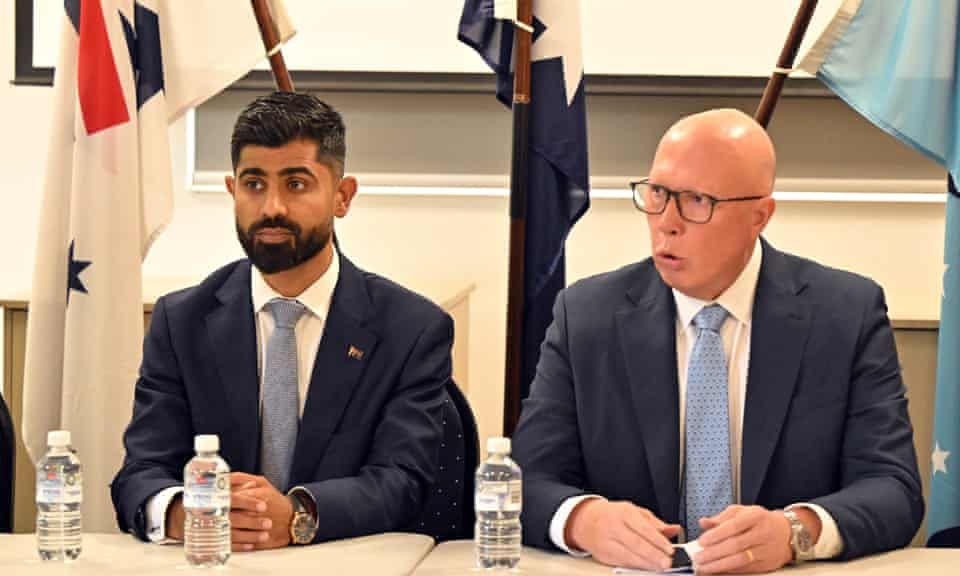
The Guardian Australia report, “Zahid Safi co-authored a submission to a 2021 parliamentary inquiry into Australia’s involvement in the Afghanistan war which incorrectly cited a Human Rights Watch (HRW) report to allege Hazara “warlords” had “cut the breasts of women” and watched “live delivery of pregnant women” during the early 1990s. The 2005 HRW report does not mention these acts.”
While every candidate deserves scrutiny, Zahid Safi’s past positions and actions raise troubling questions. Zahid Safi is no ordinary political candidate. He is someone who, in an official submission to the Australian government, denied the systematic persecution and genocidal violence committed against Hazaras in Afghanista. A community that has faced mass killings, forced displacement, and targeted terror for over a century.
From the ethnic cleansing campaigns of Emir Abdur Rahman Khan in the late 19th century, to the Taliban’s brutal massacres in places like Mazar-e-Sharif in the late 1990s, and the countless terrorist attacks over the last two decades, the Hazara story is tragically well documented. These are not claims made lightly; they are backed by international human rights reports, witness testimonies, and historic archives.
Report on Afghanistan:Download
Hazara Genocide Archives: https://www.hazaragenocide.com/
Yet, despite this undeniable history, Zahid Safi chose not only to ignore it, but to argue against recognising Hazara persecution in a submission aimed at shaping humanitarian visa policy. This is not just a distortion of facts, it is a profound erasure of trauma, and a stance that is wholly inconsistent with Australia’s democratic values of compassion, inclusion, and justice.
What makes Zahid Safi’s position even more alarming is the intent behind his submission. Instead of advocating for vulnerable Hazara asylum seekers, who are disproportionately targeted by extremist violence in Afghanistan, his submission argued against the prioritisation of this group for humanitarian resettlement.
Such a stance not only undermines Australia’s commitment to protect those most in need, but it also echoes a deeper, more insidious form of prejudice. When someone attempts to block the recognition and resettlement of a persecuted minority, especially in the face of overwhelming evidence, it can not be dismissed as a difference of opinion. It is, by definition, a discriminatory act.
It is difficult to reconcile this with the notion of fair representation. If Zahid Safi were to gain a seat in Parliament, what kinds of policies would he support or oppose? Who would he choose to speak for, or against? These are not hypothetical concerns; they are matters of national interest and ethical responsibility.
This leads to an uncomfortable but necessary question: how did the Liberal Party come to endorse someone with such a record? In an era where political parties are increasingly held accountable for the backgrounds and beliefs of their candidates, one would expect a rigorous vetting process.
Yet Zahid Safi’s views were not hidden. His submission was a public document. His positions were accessible. If the party did not know, it suggests a serious lapse in judgment. If they did know, it suggests a disturbing level of indifference toward the principles of diversity and justice that Australians hold.
The preselection of Zahid Safi is not just a reflection of one man’s beliefs, it is a statement about what the Liberal Party is willing to overlook in the pursuit of political representation.
Beyond his ideological positions, Zahid Safi’s eligibility also deserves close scrutiny. Born in Afghanistan and raised in Finland, Safi holds, or has held multiple citizenships. Under Section 44 of the Australian Constitution, anyone who holds dual or multiple citizenships is ineligible to run for federal Parliament unless they have taken reasonable steps to renounce those citizenships.
Has Zahid Safi formally renounced his Finnish and Afghanistan citizenships? The public has a right to know. Transparency on this matter is not optiona, it is a constitutional requirement. Given the number of political careers that have ended over dual citizenship scandals, this is not a small oversight. It’s a legal threshold for public office.
Australia prides itself on being a nation of fairness, multiculturalism, and truth. To see a candidate endorsed by a major party who has denied historical atrocities, opposed humanitarian pathways for a persecuted minority, and potentially violates constitutional law, calls those values into question.
This is not about partisanship. It is about who we are as a country and who we choose to speak on our behalf. Zahid Safi’s record raises serious and uncomfortable questions, ones that must be addressed before any further steps toward public office are taken.
 Outsider