
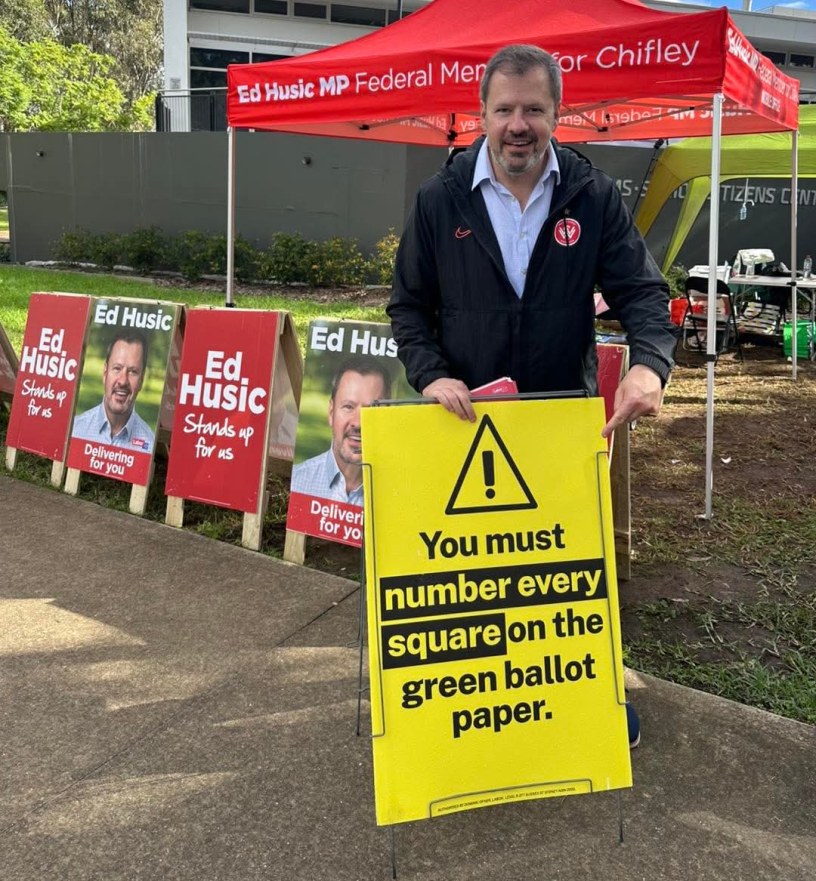
The Australian Labor Party’s sweeping victory in the 2025 federal election has been widely interpreted as a public endorsement of its policies, leadership, and progressive agenda. Yet, amid the celebrations, one decision by the Albanese government drew significant media attention and public discourse, the removal of Ed Husic, the Member for Chifley, from the Cabinet.
For many, Husic’s exclusion was both surprising and upsetting. As one of the most prominent Muslim figures in federal politics and a long-serving MP, his departure from the ministry sparked questions about representation and internal party dynamics. However, for some members of his electorateespecially those who have tried to engage directly with his office, this development was less a loss and more an opportunity for reflection and possible improvement.
I count myself among those who, while acknowledging Ed Husic’s credentials and qualifications, found his performance as a local representative deeply disappointing. Husic may be articulate and highly competent at the federal level, but his local engagement, particularly through his electorate office—was troublingly inadequate.
Chifley encompasses diverse and underserved suburbs such as Mount Druitt, Rooty Hill, Doonside, Oakhurst, and Hassall Grove. These areas are home to many culturally and linguistically diverse communities, including significant refugee and migrant populations who often rely heavily on their local MP for support with federal matters, immigration, social services, and employment assistance among them.
Unfortunately, throughout the previous term of Parliament, many in these communities, myself included, found Husic’s electorate office unresponsive and unhelpful. In my own attempts to seek assistance on behalf of community members, the response was not just slow; it was virtually non-existent. Emails would go unanswered for weeks or even months if they received any reply at all. Phone calls were often met with curt, dismissive explanations about the overwhelming volume of correspondence, and the office’s inability to respond to everyone. While administrative overload is a reality, it should never become an excuse for negligence, especially in electorates where the needs are both urgent and acute.
The perception among many was that Husic’s Cabinet role had created a disconnect between him and his constituents. A ministerial position undoubtedly comes with added responsibilities, but it should never dilute the foundational role of an MP: to represent, listen to, and advocate for their electorate.
Worse still, the behavior of his office staff exacerbated this gap. Staffers, as extensions of an MP’s commitment to their constituents, play a critical role in community engagement. In Husic’s case, the consistent failure of his team to respond compassionately and promptly to people in need sent a clear message, that access to your federal representative depended more on political proximity than on merit or urgency.
When I raised these concerns with friends affiliated with Labor, many responded with: “Why didn’t you contact me?” That, in itself, underscores the systemic issue. A resident of an electorate should never need to seek backdoor connections or informal intermediaries just to receive basic assistance from their MP.
Sadly, this is not an isolated case. Many federal MPs, especially those who hold senior positions in government, seem increasingly removed from the everyday realities of their electorates. The system fosters a hierarchy where proximity to power can often come at the expense of grassroots service. As someone who has long been involved in community initiatives and grassroots advocacy, I find this not only disappointing, it is disheartening.
Members of Parliament are elected to represent all constituents, regardless of race, faith, migration status, or political affiliation. Accessibility, empathy, and effective communication should be non-negotiable aspects of an MP’s job. No electorate should feel abandoned because their representative has climbed the party ladder.
With Ed Husic no longer in Cabinet, there is now an opportunity for renewal; both for him personally and for the standards of political representation more broadly. Perhaps the added time and focus will allow him to reassess his approach to local engagement. A reset in priorities could include hiring more competent and compassionate staff, creating better communication systems, and actively reaching out to the communities who feel left behind.
Representation is not a privilege granted to a few, it is a duty owed to all. It is my hope that the lessons from this last term serve as a wake-up call, not just to Ed Husic but to all MPs who aspire to lead while forgetting to serve.
 Outsider